.png)

By using our website, you agree to the use of cookies as described in our Cookie Policy
Concrete Resurfacing Tips & Info in Palm Beach
Our blog shares tips on epoxy floors, faux travertine, pool decks, and other concrete solutions for homes and businesses throughout Palm Beach. Palm Beach Resurfacing writes every post based on real projects. These range from driveways and patios to warehouse floors and garage floors, so you get advice that actually works. Ready to start your project? Call 561-694-0273 or get a quote.
Can You Fix Cracked Concrete in Palm Beach County Without Replacing It?
Most property owners see a crack and immediately think replacement. That's the expensive route — and often the wrong one. Concrete doesn't need to be perfect to be functional. It just needs to be stable, sealed, and structurally sound. In Palm Beach County, where heat, humidity, and shifting soils create their own brand of chaos, cracks are almost inevitable. But that doesn't mean you're stuck with a full demo job.
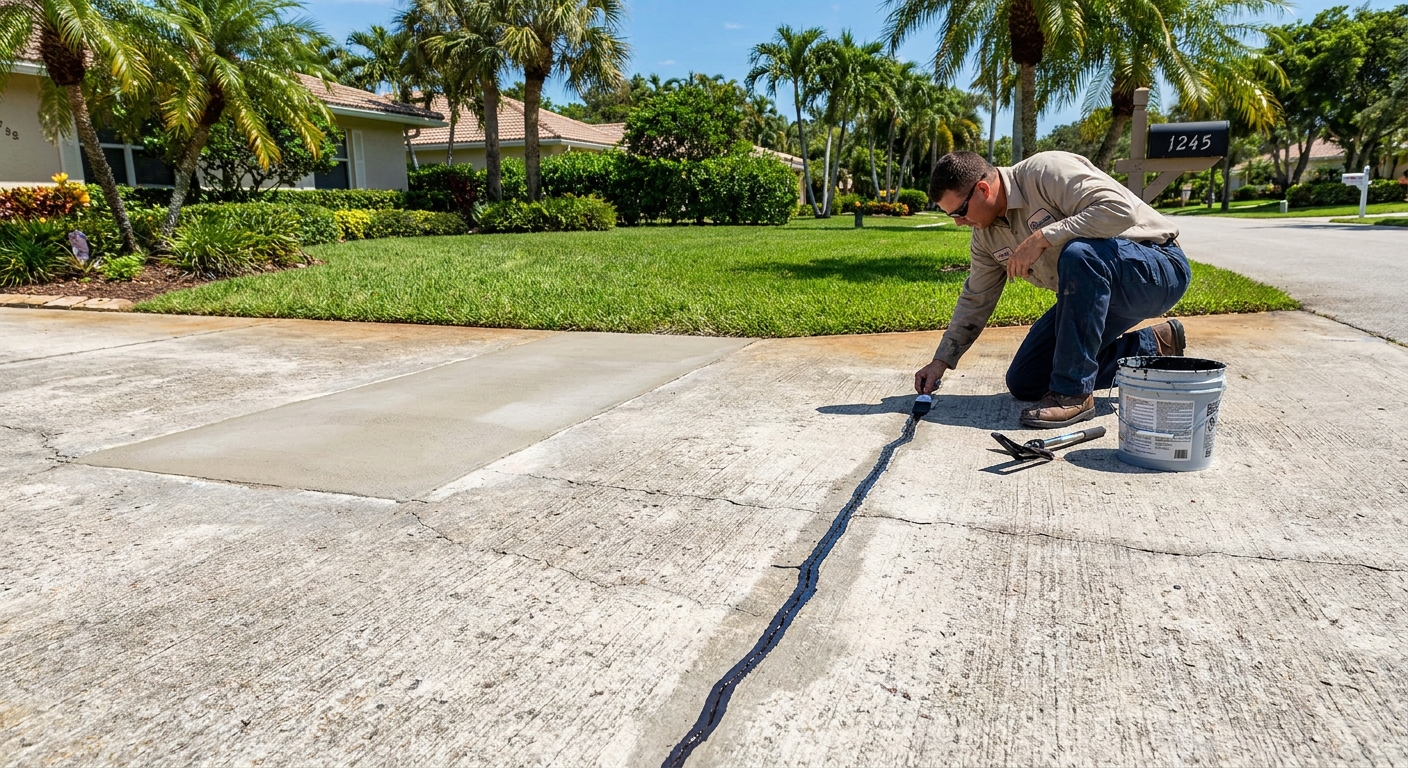
Here's what matters. Not every crack is a crisis. Some are surface-level cosmetic issues. Others signal deeper problems that need attention now. The difference comes down to what caused the crack, how big it is, and whether it's actively getting worse. Fix it right, and you can add years to your concrete without touching a jackhammer.
Why Palm Beach Concrete Cracks in the First Place
Concrete isn't as indestructible as people think. It's strong under compression, but terrible under tension. That means when the ground shifts or temperatures swing, concrete doesn't bend — it breaks. In South Florida, we've got sandy soil that moves with every heavy rain, blazing sun that heats slabs to the point of expansion, and enough moisture to keep things shifting year-round.
Here's what's typically behind the damage:
- Heat causes expansion, cold causes contraction — and concrete pays the price
- Soil underneath settles or shifts, leaving voids that lead to cracking
- Poor installation means weak spots from day one
- Heavy vehicles or equipment create stress points over time
- Water infiltration weakens the base and accelerates deterioration
Not all cracks mean the same thing. A hairline crack in a driveway is different from a wide gap in a foundation slab. One's a nuisance. The other's a structural red flag.
Fixing Without Ripping It All Out
Replacement is overkill for most cracks. The real question is whether the slab is still doing its job. If it's stable and the crack isn't spreading like wildfire, you've got options. Modern repair methods can restore strength, stop water intrusion, and even make the surface look new again — without hauling in a concrete truck.
Here's what works in Palm Beach County:
- Crack sealants for hairline fractures that just need a waterproof barrier
- Epoxy injections for deeper cracks that need structural bonding
- Polyurethane foam to fill voids and stabilize shifting slabs
- Concrete resurfacing to cover multiple cracks and refresh the appearance
- Patching compounds for isolated damage or small holes
When Sealants and Fillers Get the Job Done
Small cracks don't need big solutions. For hairline fractures or minor surface splits, a quality sealant or filler can stop the problem before it spreads. These products are designed to bond with concrete, keep water out, and flex slightly with temperature changes. They're not just cosmetic — they prevent moisture from getting under the slab and causing bigger issues down the line.
Application is straightforward. Clean out the crack, apply the product, smooth it down, and let it cure. It's a DIY-friendly fix for driveways, walkways, and patios. Just make sure the crack isn't actively widening. If it is, you need more than a tube of filler.
Epoxy and Polyurethane Bring the Strength Back
Deeper cracks need something stronger. Epoxy and polyurethane injections are what pros use when structural integrity is on the line. These materials get pumped into the crack under pressure, filling every gap and bonding the concrete back together. Once cured, they're often stronger than the surrounding slab.
Epoxy works best for narrow, stable cracks. Polyurethane is better when there's active movement or moisture involved — it expands to fill voids and can even handle wet conditions. Both methods stop water infiltration and prevent the crack from spreading. They're also a fraction of the cost of replacement.
Resurfacing Covers a Lot of Sins
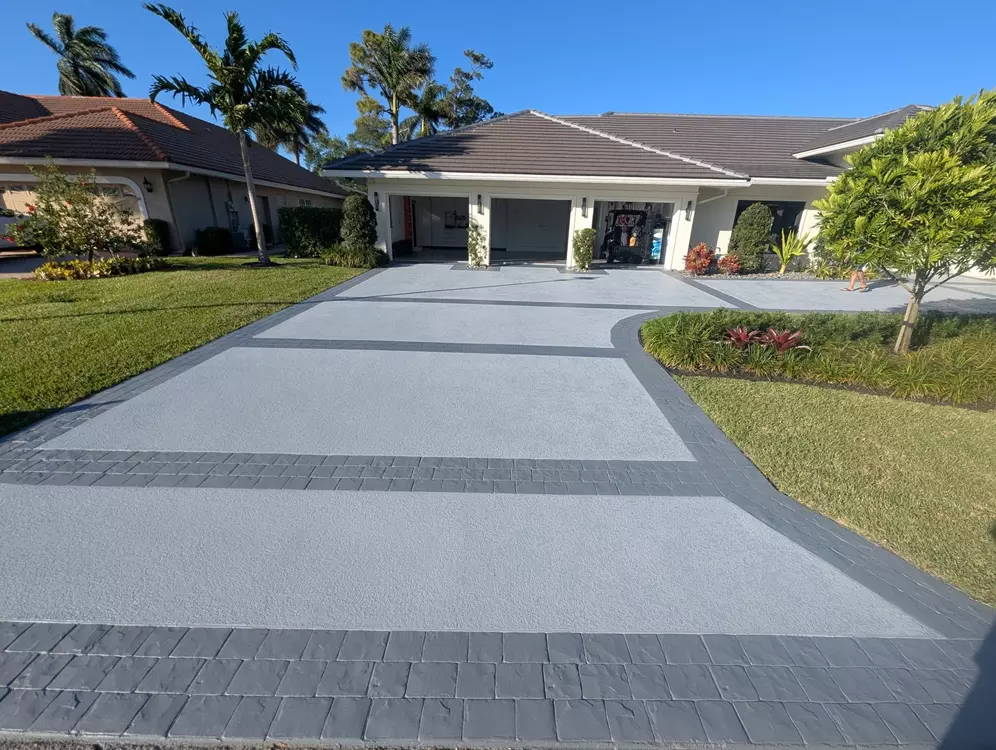
If your concrete looks like a road map of cracks but the base is still solid, resurfacing might be the move. This process involves applying a thin overlay of new concrete or a polymer-modified coating over the existing surface. It hides the cracks, strengthens the slab, and gives you a fresh finish that can last for years.
Resurfacing is especially popular for pool decks, patios, and driveways in Palm Beach County. You can even add color or texture to match your aesthetic. The key is that the underlying slab has to be structurally sound. If it's sinking or severely cracked, resurfacing alone won't fix the problem.
The Repairs That Don't Hold Up
Not every fix is worth the effort. If the concrete is severely damaged, sinking in multiple places, or has cracks wider than a quarter-inch that keep spreading, you're probably looking at replacement. Same goes for foundation slabs with structural issues or surfaces that have failed due to poor installation.
Here's when repair isn't enough:
- Multiple deep cracks running in different directions
- Sections of the slab sinking or heaving unevenly
- Foundation cracks that threaten the building's stability
- Concrete that was poorly mixed or installed and is now crumbling
- Water damage so severe the base material has deteriorated
Why Repair Beats Replacement When It Can
Repairing concrete saves time, money, and hassle. It's faster, less disruptive, and in most cases, just as effective as replacement when done right. Plus, you're not dealing with the waste or environmental impact of tearing out and disposing of old concrete. Modern repair materials are strong, durable, and designed to handle Florida's climate.
The benefits stack up:
- Lower cost — often 50-70% less than full replacement
- Faster turnaround — most repairs are done in a day or two
- Less mess and disruption to your property
- Environmentally smarter — less waste, fewer new materials
- Extends the life of your existing concrete by years
Who to Call When the Crack Needs Attention
DIY works for small, stable cracks. But if you're dealing with structural issues, active spreading, or multiple problem areas, bring in a pro. Look for a licensed contractor with experience in Palm Beach County who understands local soil conditions and knows which repair methods hold up in Florida's heat and humidity. Don't just hire the cheapest option — hire the one who can prove their work lasts.
Cracked concrete doesn't have to mean a full tearout and rebuild. When the damage is caught early and repaired correctly with residential concrete resurfacing, you can keep your slabs stable, sealed, and functional for years to come. The trick is knowing when to patch, when to inject, and when to walk away and start fresh. Most of the time, repair is the smarter play.
Let’s Restore Your Concrete with Confidence
We know how important it is to keep your property looking sharp and safe, without unnecessary expense or hassle. If you’re ready to tackle those cracks and give your concrete a new lease on life, let’s talk solutions that fit your needs and budget. Call us at 561-694-0273 or get a quote today, and together we’ll make your concrete strong and worry-free for years to come.
‹ Back
Recent Posts
-
Which Concrete Finish Looks Best Around a Palm Beach Pool?
September 25, 2026
-
How Long Does Concrete Resurfacing in Palm Beach Last?
September 11, 2026
-
Faux Wood Concrete Flooring for Indoor Use in Palm Beach County
August 28, 2026
-
What Happens as Concrete Surfaces Age in Palm Beach County
August 14, 2026
-