


By using our website, you agree to the use of cookies as described in our Cookie Policy
Concrete Resurfacing Tips & Info in Palm Beach
Our blog shares tips on epoxy floors, faux travertine, pool decks, and other concrete solutions for homes and businesses throughout Palm Beach. Palm Beach Resurfacing writes every post based on real projects. These range from driveways and patios to warehouse floors and garage floors, so you get advice that actually works. Ready to start your project? Call 561-694-0273 or get a quote.
What Type of Concrete Finish Works Best for Palm Beach Walkways?
Most property owners think concrete is just concrete. Pour it, smooth it, walk on it. But Palm Beach weather sees things differently — and if you don't account for that, you're setting yourself up for slips, cracks, and expensive do-overs. The finish you choose isn't just about looks. It's about traction when it rains, durability under relentless sun, and whether that surface still holds up three hurricane seasons from now.
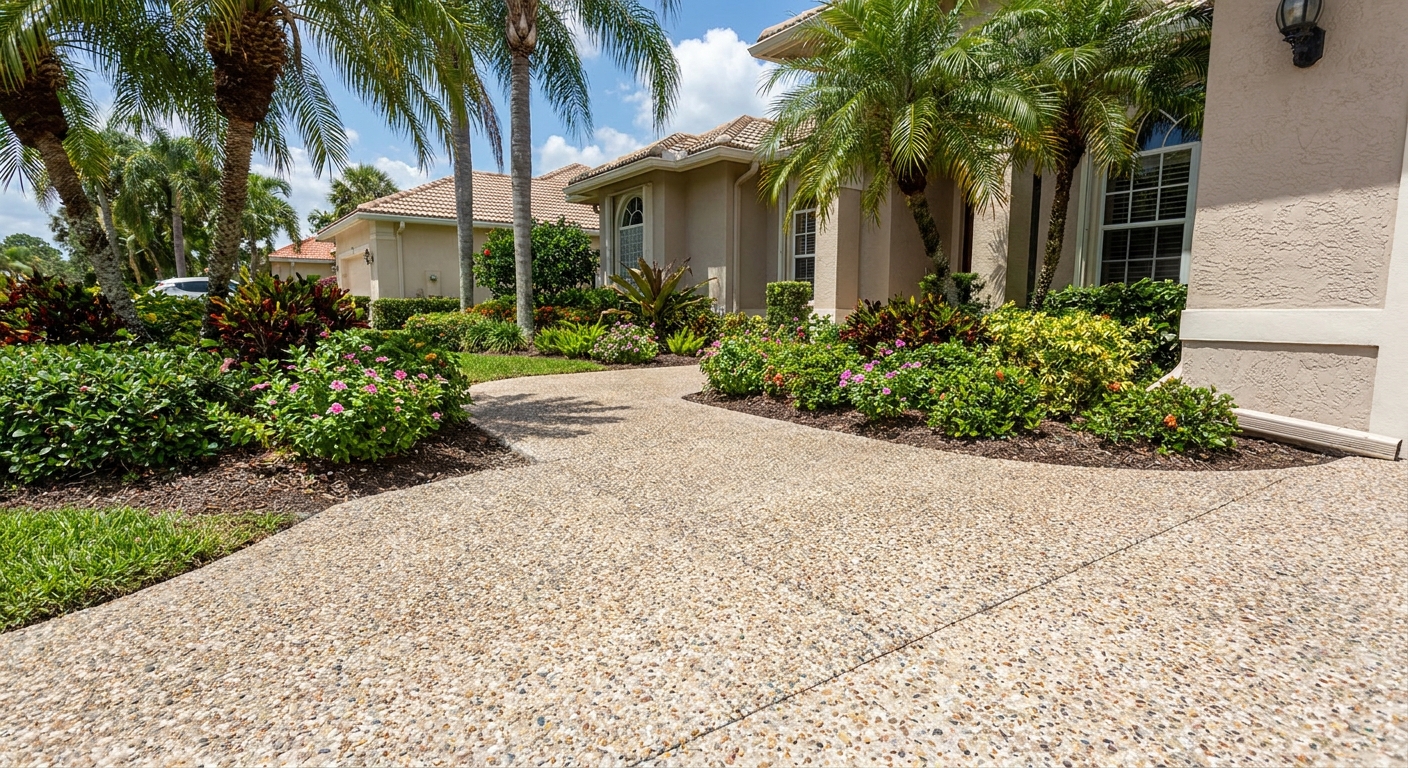
So here's what matters. If you're installing a walkway that needs to survive humidity, saltwater spray, and foot traffic in flip-flops, that finish better deliver. Every choice leaves a mark — literally. And every decision should be rooted in how the surface performs, not just how it photographs for the listing.
Heat and Moisture Don't Play Fair
Palm Beach doesn't do mild. We're talking about a climate that swings from torrential afternoon storms to blistering UV exposure in the same day. That kind of environment punishes lazy installations. Concrete that looks great in January can turn into a liability by June if the finish wasn't chosen with intention.
Humidity alone makes smooth surfaces dangerous. Add in poolside runoff or a sudden downpour, and you've got a slip hazard waiting to happen. The right finish grips when wet and doesn't crack under thermal expansion. Anything less is a gamble we wouldn't take — and neither should you.
Texture Means Traction
You can't deduct the concrete itself — that's infrastructure, not an operating expense. But the finish? That's where function meets safety, and it's worth every dollar. We generally prioritize finishes that deliver reliable traction without looking industrial.
Here's where different approaches earn their keep:
- Broom finish gives you slip resistance through simple parallel grooves — affordable, effective, and low-maintenance for everyday walkways
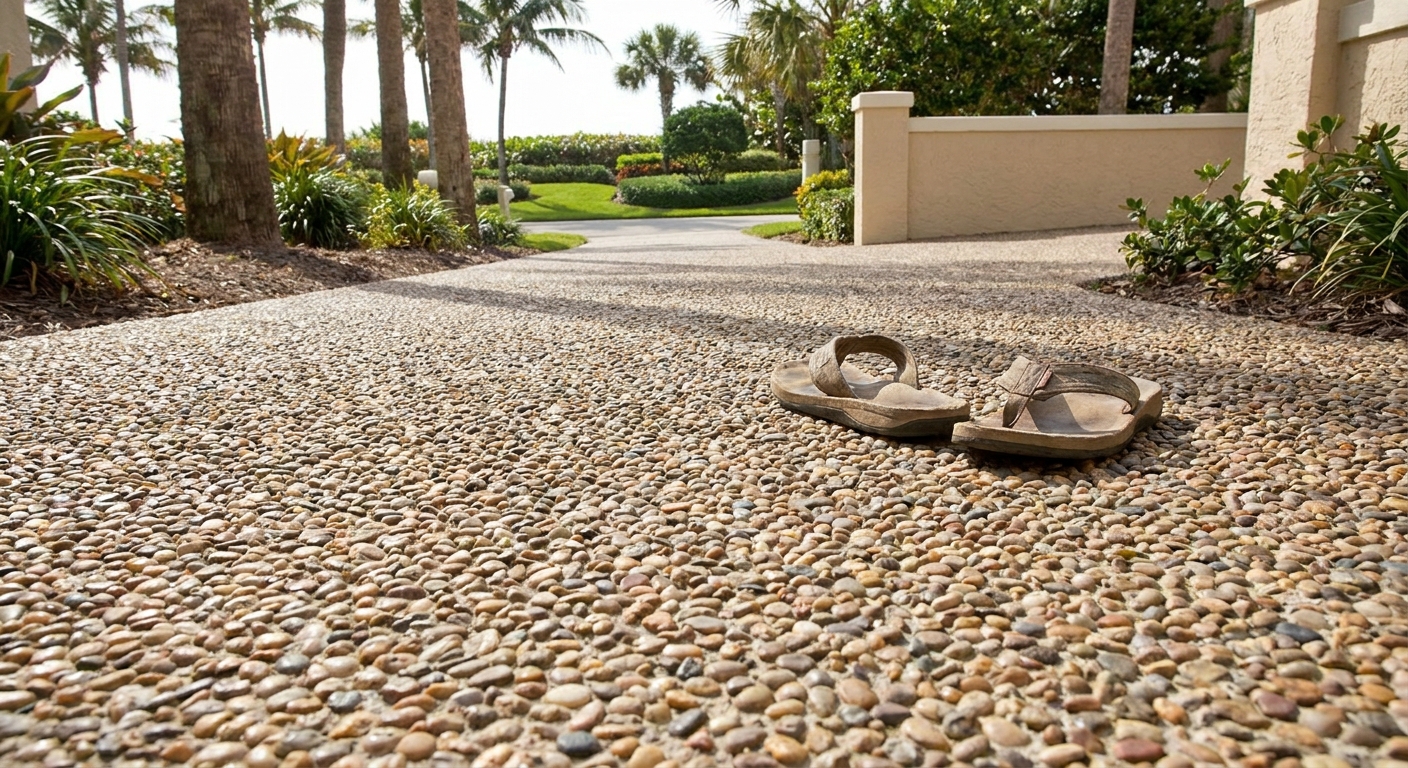
- Exposed aggregate reveals embedded stone for serious grip and visual interest, ideal when you want durability that doesn't look boring
- Salt finish creates subtle pitting that grabs wet feet without the harsh texture of deeper patterns
- Stamped concrete mimics stone or pavers but needs sealer reapplication to stay safe when wet — aesthetics come with upkeep
- Polished surfaces look sleek indoors but turn into ice rinks outside unless treated with anti-slip coatings, which defeats the point
When Slick Finishes Backfire
Want a finish that lasts? You'll need to prove it can handle what Palm Beach throws at it — and that means more than just curing properly.
We check three things before recommending any surface:
- It provides measurable slip resistance when saturated, not just when bone-dry
- It holds up under direct sunlight without fading, flaking, or turning brittle
- It handles thermal cycling without cracking at the edges or lifting at control joints
Miss one of those, and the finish fails before the concrete does. Even if the base slab is bulletproof. And if part of the walkway sits in shade while another section bakes all day? That's where inconsistent expansion shows up first. No amount of sealer fixes poor material choice.
Aggregate Delivers More Than Good Looks
Exposed aggregate isn't just decorative — it's one of the most forgiving finishes for coastal properties. The stone stays cooler underfoot than smooth concrete, the texture hides minor weathering, and it doesn't show dirt the way polished surfaces do.
You'll need the installer to wash and seal it properly, though. Skip that step and you're looking at loose stones and uneven wear within a year. We've seen it happen when contractors rush the reveal process or use weak sealer. That's not a material problem — that's a craftsmanship problem.
Your Walkway Is Only As Good As Its Base
Want your finish to stay intact? Build it on solid ground. You'll need more than a thin pour over sandy soil to keep things level.
Here's what proper prep looks like:
- Compacted aggregate base at least four inches deep to prevent settling
- Proper drainage slope to move water away from the surface, not across it
- Reinforcement mesh or rebar if the walkway spans soft soil or sees heavy use
- Control joints cut at regular intervals to manage cracking as the slab moves
If the foundation shifts, no finish will save you. Decorative stamping over a poorly graded base just means you'll have pretty concrete that cracks in six months. And once that happens, you're not patching — you're replacing.
Where Most Installations Go Wrong
Choosing Style Over Safety
Trying to make a walkway look like a showroom floor? The elements won't care how it photographs. Slick finishes might win design awards, but they lose the traction test the first time it rains. Most property owners stay smart by prioritizing grip, then layering in aesthetics through aggregate color or subtle stamping.
Skipping the Sealer Schedule
Don't wait until the surface looks dull to reapply sealer. If you let protection lapse, moisture seeps in and the finish degrades from below. Reseal every two to three years depending on foot traffic. It's routine maintenance. It works.
Ignoring Drainage from the Start
If water pools on your walkway, that's a grading failure, not a finish failure. No texture can compensate for standing water. Slope the surface, install proper runoff channels, and don't assume the concrete will just "shed" moisture on its own.
Matching Finish to Function
Not every walkway demands the same treatment. A private garden path can lean decorative. A pool deck or main entry? That needs industrial-grade traction and UV stability.
We help property owners think through:
- Where the walkway sits relative to water sources, shade, and traffic patterns
- How much maintenance they're willing to commit to over time
- Whether the finish needs to match existing hardscape or stand on its own
- What happens if repairs are needed — can sections be patched without obvious mismatches
It's not about upselling a premium finish. It's about installing the right one so it doesn't become a problem later. If you're curious how other property owners have approached these decisions in coastal settings through residential walkway resurfacing or exploring spray texture options for enhanced traction, or considering the elegance of faux travertine finishes, or reviewing grey stone patterns that hide weathering, the patterns are consistent — traction and longevity win over flash every time.
Concrete That Holds Its Ground
Installing a walkway isn't the challenge. Making sure it's still safe, level, and intact five years from now — that's where shortcuts catch up with you. There's no excuse for guessing when the best finishes are proven and available. But there's also no forgiveness when you prioritize the wrong variables and end up with a surface that fails under real-world conditions.
Ready to Upgrade Your Walkway?
Let's make sure your concrete walkway stands up to Palm Beach weather and looks great for years to come. We know what works in this climate, and we're here to help you choose a finish that delivers both safety and style. Give us a call at 561-694-0273 or get a quote today so we can get your project started the right way.
‹ Back
Recent Posts
-
What Type of Concrete Finish Works Best for Palm Beach Walkways?
November 6, 2026
-
Is It Time to Update Your Palm Beach Garage Floor?
October 23, 2026
-
Can Decorative Concrete Give Your Palm Beach Patio a New Look?
October 9, 2026
-
Which Concrete Finish Looks Best Around a Palm Beach Pool?
September 25, 2026
-
How Long Does Concrete Resurfacing in Palm Beach Last?
September 11, 2026