.png)

By using our website, you agree to the use of cookies as described in our Cookie Policy
Concrete Resurfacing Tips & Info in Palm Beach
Our blog shares tips on epoxy floors, faux travertine, pool decks, and other concrete solutions for homes and businesses throughout Palm Beach. Palm Beach Resurfacing writes every post based on real projects. These range from driveways and patios to warehouse floors and garage floors, so you get advice that actually works. Ready to start your project? Call 561-694-0273 or get a quote.
Should You Resurface or Replace Worn Driveway Concrete?
Most homeowners see cracks in their driveway and think it's just cosmetic. A little ugly, maybe annoying, but not urgent. The truth is, what you're looking at isn't just surface damage—it's a decision point. And if you wait too long or choose the wrong fix, you're either wasting money on a Band-Aid or overpaying for surgery you didn't need.
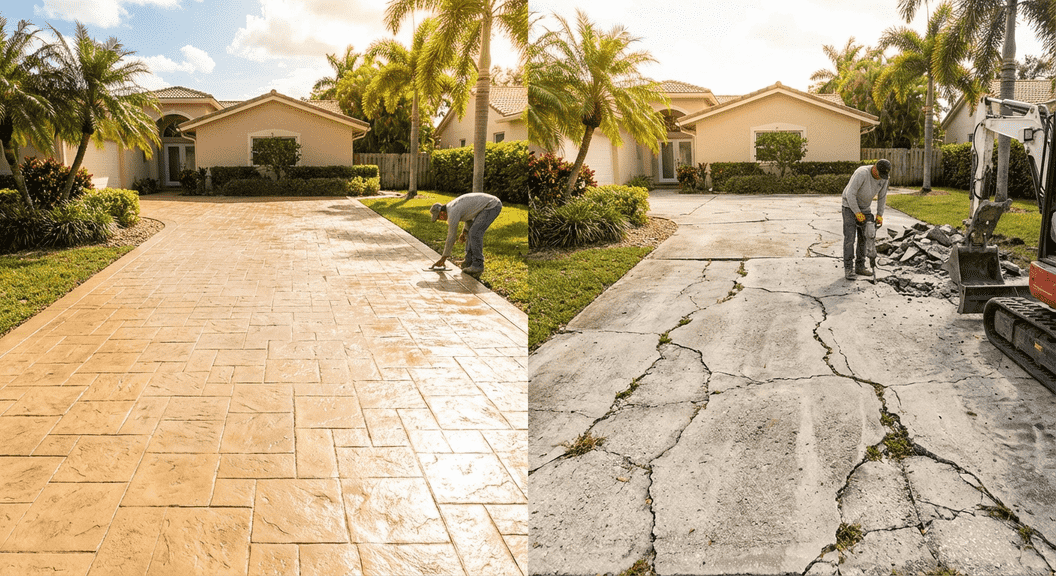
So here's what matters. If the slab beneath is still doing its job, resurfacing can buy you years. But if the foundation is shot, no overlay in the world will hold. Every crack tells a story. Every shift in the concrete is a clue. And every dollar you spend should be tied to what's actually broken—not just what looks bad from the curb.
Resurfacing Covers the Problem, Not the Cause
Resurfacing works when the damage is shallow. You clean the surface, patch the small stuff, and lay down a fresh coating that bonds to the old concrete. It hides stains, fills minor pitting, and gives you a clean finish without tearing anything out. For driveways that still have structural integrity, it's a smart play.
But don't mistake a facelift for a foundation repair. If the concrete underneath is heaving, settling, or riddled with deep fractures, resurfacing is just kicking the problem down the road. The overlay might look good for a season or two, but the underlying issues will crack through. And when they do, you'll be back at square one—only now you've paid twice.
When the Slab Is Still Solid
Resurfacing makes sense when the base is stable and the damage is cosmetic. We're talking about surface cracks less than a quarter-inch wide, discoloration from oil or rust, or light scaling from freeze-thaw cycles. If the driveway isn't sinking, buckling, or breaking apart in chunks, an overlay can extend its life and improve its appearance without the cost of replacement.
You also get options. Resurfacing materials come in different textures and colors, so you can customize the look. It's faster than replacement, less disruptive, and a fraction of the price. Just make sure the concrete beneath can handle the bond. If it's flaking or crumbling, the overlay won't stick—and you'll be peeling it off within a year.
Replacement Fixes What Resurfacing Can't
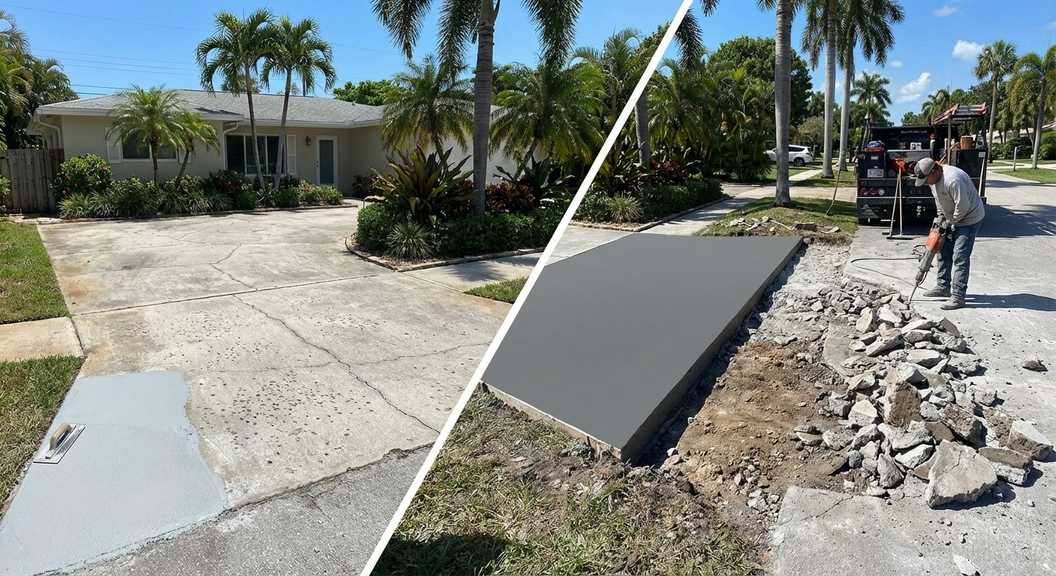
When the damage goes deeper than the surface, replacement is the only real solution. That means breaking out the old slab, addressing the base, and pouring fresh concrete. It's more expensive, more time-consuming, and more disruptive. But it's also the only way to fix structural problems that resurfacing will never touch.
Replacement gives you a clean slate. You can correct drainage issues, reinforce the base, and ensure the new slab is built to last. If your driveway is already 20 or 30 years old and showing serious wear, replacement might actually save you money in the long run. Patching and resurfacing only go so far when the foundation is failing.
Signs You Need to Rip It Out
Not every crack means you need a new driveway. But some do. If you're seeing any of the following, resurfacing won't cut it:
- Cracks wider than a quarter-inch that run through the entire slab
- Sections of concrete that have settled or heaved unevenly
- Widespread spalling or crumbling, especially near the edges
- Water pooling in the same spots after every rain
- Multiple failed repairs that didn't hold
These are signs that the base has shifted, the drainage is wrong, or the concrete itself has reached the end of its useful life. Resurfacing over these issues is like painting over rot—it might look better for a minute, but it won't last.
The Numbers Don't Lie
Resurfacing is cheaper. That's the appeal. You're looking at a fraction of the cost of replacement, and the job gets done in days instead of weeks. But cheaper upfront doesn't always mean smarter long-term. If the underlying concrete is compromised, you'll be paying for resurfacing now and replacement later.
Replacement costs more, but it's a one-time fix. You're not patching over problems—you're eliminating them. And if your driveway is already on borrowed time, replacement is the only move that makes financial sense. Don't let sticker shock push you into a decision that costs you twice.
What the Damage Actually Tells You
Surface stains, minor cracks, and light wear? Resurface. Deep fractures, uneven settling, and crumbling edges? Replace. The condition of the concrete dictates the fix, not your budget or your timeline. Ignoring the severity of the damage doesn't make it go away—it just makes the eventual repair more expensive.
We've seen homeowners try to stretch resurfacing over driveways that needed replacement. It never ends well. The overlay cracks within months, the base continues to shift, and they end up paying for both fixes anyway. If you're not sure what you're dealing with, bring in a contractor who can assess the slab and give you a straight answer.
How Long Each Option Lasts
A properly done resurfacing job can last 8 to 15 years, depending on the material and the condition of the base. But that's only if the underlying concrete is stable. If it's not, you're looking at a much shorter lifespan—sometimes just a few years before the cracks reappear.
Replacement, on the other hand, can give you 30 years or more if the base is prepped correctly and the concrete is poured right. It's a bigger investment, but it's also a longer payoff. If you're planning to stay in your home, replacement is often the smarter bet.
Don't Guess When You Can Measure
The worst thing you can do is make this call based on a hunch. Get a professional to inspect the driveway, check the base, and measure the depth of the cracks. They'll tell you whether the slab is salvageable or if it's time to start over. That assessment is worth the cost—it keeps you from throwing money at the wrong fix.
We help homeowners make these decisions every day. Not by selling them the most expensive option, but by showing them what's actually broken and what it takes to fix it right. Whether you resurface or replace, the goal is the same—get it done once, get it done right, and move on. Our team specializes in residential projects including patios, pool decks, garage floors, and walkways.
Let’s Make Your Driveway Last
We know how important it is to get the right fix for your driveway—one that saves you money and keeps your home looking sharp for years to come. If you’re ready to stop guessing and start solving, let’s talk about your options. Call us at 561-694-0273 or get a quote today, and together we’ll make sure your next step is the right one.
‹ Back
Recent Posts
-
Which Concrete Finish Looks Best Around a Palm Beach Pool?
September 25, 2026
-
How Long Does Concrete Resurfacing in Palm Beach Last?
September 11, 2026
-
Faux Wood Concrete Flooring for Indoor Use in Palm Beach County
August 28, 2026
-
What Happens as Concrete Surfaces Age in Palm Beach County
August 14, 2026
-